
Related to what is around us
Is our brain trapped inside our skull? We have long since outsourced cognitive functions. We have transferred memory to analogue and, above all, digital storage devices, delegated arithmetic operations to machines, and increasingly handed over our own thinking to AI. We have provided our cognitive system with support and, in doing so, understood that we are neither cognitively nor emotionally confined within ourselves. We are in constant dialogue with our environment and are not left unimpressed.
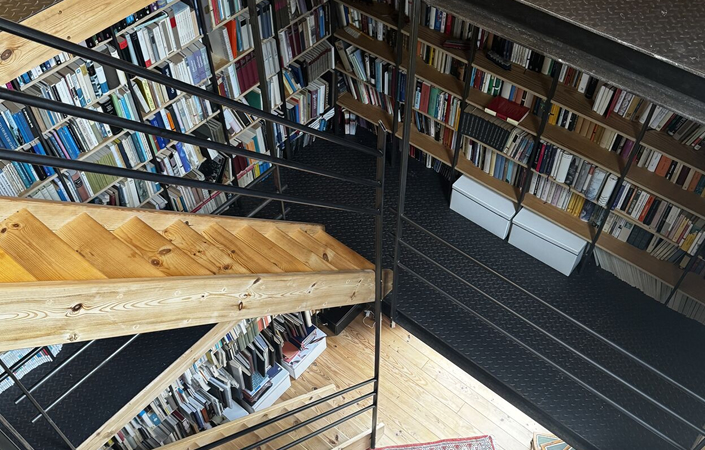
I sit in my library and, looking at the spines of the books, I am much more inspired than when I try to navigate through twenty open windows on a screen. Different environments make me think differently, open up other paths of thought.
I remember a meeting last week. There is a desire for open, multi-perspective, creative exchange. The room is cramped, windowless, and the notes from previous meetings are written on the wipeable, but rarely wiped, boards on the walls. It is exhausting to resist the presence of this room; it forces you to remain in old patterns of thinking, unable to break away from the everyday. The space and what it can trigger is often stronger than the individual desire for difference.
How different was the encounter the week before, a leadership meeting in a museum. The theme of the exhibition is not so important; what is effective is the environment – different, unusual. It creates a different mood, a different attitude. And perspectives on issues shift, new things enter the horizon of thought.
Where we are, what we surround ourselves with, is not neutral. We are always related to what is around us. Not neutral, but in an active relationship, in active exchange. Spaces and atmospheres should be chosen carefully.
Author: Rüdiger Müngersdorff
First release: March, 03, 2026