
Articles on Organizational and Cultural Development
We are currently reorganizing the archive together with our new website. All articles will gradually be available again.

Performance?
KPIs are currently flooding the working levels within companies. They follow a digital control logic and treat employees as digitally controllable units. They follow a machine/robot logic. It is all about performance and improving performance.

Aesthetic experiences open up spaces
The pressure is too high; inner spaces are shrinking. And yet, here I am with a small group of Chinese executives at the newly opened h+Art Museum in Suzhou. A building designed by Tadao Ando and an exhibition that, in many places, explores the themes of human loneliness and a sense of being lost.
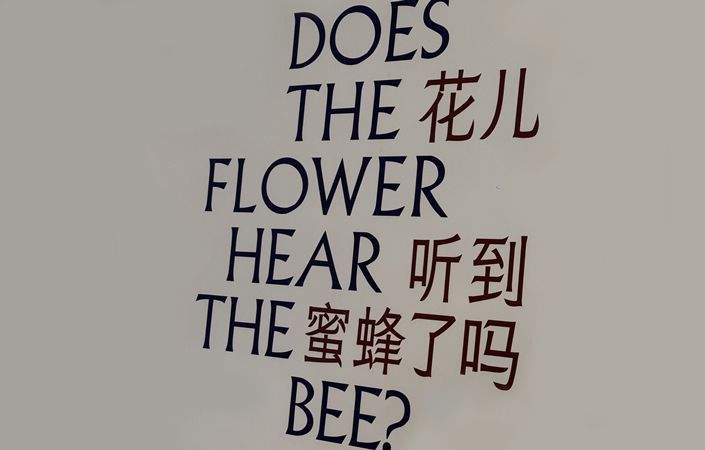
Who is in charge? The downside of the »Chinese Speed« metaphor
Who is in charge? The downside of the »Chinese Speed« metaphor It has always been surprising to find the pathological concept of »obsession« re-emerging in a business concept such as »customer obsession«. One aspect of this concept can also be found in the »Chinese...
Long working hours equals Chinese speed?
Long working hours equals Chinese speed? Chinese speed has many facets. Long working hours are, in fact, a relatively minor factor in the rapid achievement of goals and success. One important aspect, it seems to me, is linked to preferred ways of thinking. Western...

A beginning – We have a lot to say
A trend or a return to the old hierarchical world? There are already the first posts on social media positioning themselves against »wokeness«. Sometimes with an attack on the »soft« fashions in the people departments and and the so-called soft consultancies.
Empathy – once again
There is a lot of talk about empathy as a leadership trait. Empathy is thus primarily located in the process of communication between people. However, empathy has another, essential dimension, which also places it at the center of strategy development.

Culture and strategy. Do we have to choose one over the other?
Black and white. Good and evil. Anima and animus. Emotional and rational. Social and personal. Is life made of dualities? Strategy and culture are one of these dualities we often encounter business-wise. Are we talking about opposing forces?
We need new value processes
Almost all companies have, now quite some time ago, dealt with their values, often writing them down and distributing them throughout the company. A significant source was often the memory of the founders’ »philosophy« and their words, often late words.
TheQuestBySynnecta – What are we for?
TheQuestBySynnecta – What are we for? People in organizations expect a credible answer to this question in order to be able to establish a context for their work that delivers a sense of both purpose and meaning. Reacting to such challenges, companies position...
Virtual OD by SYNNECTA – Go digital!
The digital world is a great source of new potential for organizations to foster a cultural change that is more democratic and more tuned into the future in order to address the challenges of an increasingly complex and dynamic world. In future, culture will be even more important in organizations.

The Dynamics of Shaping Identities
It is a well-known challenge: how can an organization gain and maintain a recognizable identity that gives direction to the conduct of its entire team? The history of large companies is usually shaped by mergers. Surprisingly, we often find deep-rooted and dominant origins identities there.

Some Thoughts about Mindset: a trending term
How we see the world, and what we know about it, is shaped by what has gone before: it is conditional. The notion that our perception and understanding creates an image of the world has long been doubted. At least since the time of Kant, we have known that …

Companies as urban infrastructure
We live in a society in which individuality and diversity are constantly growing. This also brings together a wide variety of identities, lifestyles and values. In urban infrastructures, we experience both the richness and the susceptibility to conflict of this situation.

Spectrum of Balance – A cultural model for organizations
The cultural model »Spectrum of Balance« was developed by SYNNECTA in co-creation with partners at other companies. It gives culture a language and thus people in organizations a basis for reflection and discussion. The model is descriptive and not normative.

Respect for the stranger
These are reflexive processes that enable us to expand both our understanding of ourselves and our understanding of the world. Diversity, with the right of diverse people to speak and be heard, is an accelerator of reflexive self-assurance and world assurance, and thus the basis of innovative strength and competitiveness.

Cultural work in organizations is work on the collective mindset
Radical collaboration, transformation, new ways of thinking, digitalization – there is hardly a topic that is not moved and supported by mindset work. What is striking is that it is always about the mindset work of the individual employee.

The political dynamics of organizational development
Politics as a driving force in companies – a topic that companies generally reject. They accept concepts of micro-politics that focus more on careers and more or less describe the structure of influence in networks.
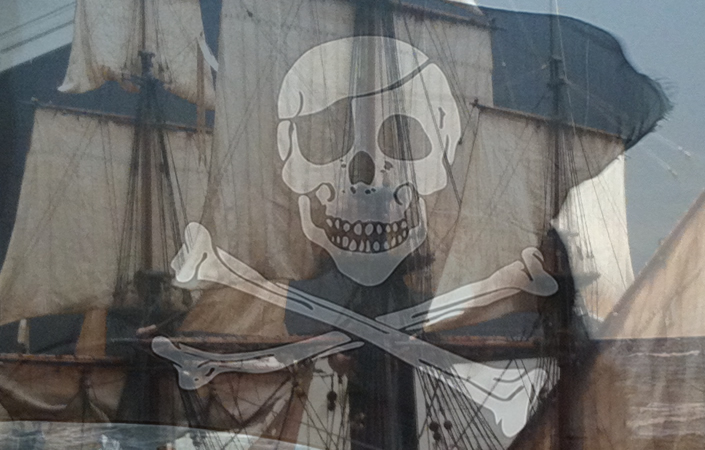
Pirate Leadership: A Dramatic Appeal for Self-Organization in Business
Pirate Leadership: A Dramatic Appeal for Self-Organization in Business It is the early 1800s. The British warship HMS Surprise is about to engage the enemy. The crew are all preparing below deck. The portholeopens and the captain climbs down in order to commit his men...

New Leadership – New Organizations
New Leadership – New Organizations Criteria for a Successful Transformation (Part 1) Everyone knows that an organization's viability for the future is decided by its ability to react and adapt to fast and fundamental changes to its conditions. Many know how...

VUCA-AIKIDO: Six stances for new sovereignty in business
As an intermediary summary, this post will put up for debate which fundamental stances make resilience and sovereignty possible in a VUCA situation. It should be understood at the outset that the concept of VUCA must not under any circumstances be abused as an excuse …
IN-WASTE-MENT: a provocation
Naturally no business enterprise can afford to constantly waste. But despite this, in addition to all their other investments, I believe that business enterprises would be wise to also risk In-Waste-Ment: Consciously wasting time and resources without carefully considering returns.
Mission Statements in Times of hybrid Societies
Mission Statements in Times of hybrid Societies Since the turn of the millennium, a mission statement should be part of every corporate identity. If you don’t have one, you shouldn’t wait any longer and get one! Why? Because they provide an orientation in times of...